7,000 ft / 2,134 m

Preserving the Silent Echoes of the Heights.

A private educational archive and research center for emerging acoustic ecologists. Documenting high-altitude bioacoustics, wind resonances, and the vanishing quiet zones of our planet since 1987.

Explore the Mountain Archive
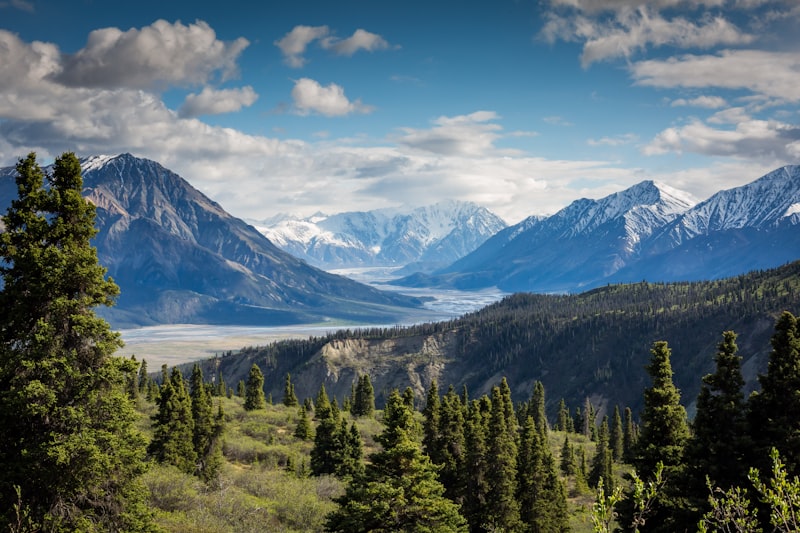
Mountain peaks in mist
Observatory
SpecimenEst. 1987
Pinus aristata, bristlecone pine — wind resonance specimen collected at 11,400 ft

About the Sanctuary

Perched at the edge of the Colorado Plateau, our observatory stands as one of the last dedicated sanctuaries for the study of mountain acoustics.

Founded in 1987 by a collective of field biologists and sound engineers, the High-Altitude Sound Archive began as a modest collection of reel-to-reel recordings captured in the wind-scoured basins of the San Francisco Peaks. Today, it houses over 40,000 hours of documented acoustic environments, spanning from the subalpine meadows of Arizona to the glacial cirques of the Rockies.

Our mission extends beyond mere collection. We are committed to the documentation of disappearing quiet zones — those rare acoustic environments where human-generated noise falls below the threshold of biological significance. In an era of expanding anthropophony, these recordings serve as both scientific baseline and cultural memory.

The archive operates as a private educational institution, training a small cohort of acoustic ecologists each year in the specialized techniques of high-altitude field recording, equipment survival in extreme conditions, and the ethical preservation of sonic heritage.

40,000+Hours archived
187Recording stations
34Years of continuous data
Learning Programs

Four pillars of acoustic ecology education

Alpine Bioacoustics

Study the vocal behaviors of high-altitude fauna across rocky and forested zones. Learn to identify species by call signature, understand elevational migration patterns, and document the acoustic niche partitioning that occurs in thin-air environments.

12 weeks6,500 — 11,000 ft

Wind & Resonance Mapping

Record and analyze the complex acoustic effects generated by wind interacting with canyon geometry. Master the use of anemometric arrays, study Helmholtz resonance in rock shelters, and map the spectral signatures of orographic wind patterns.

8 weeksCanyon systems

High-Altitude Fieldwork

Develop technical proficiency in recording equipment protection and operation under extreme conditions. Curriculum covers cold-weather battery management, windscreen engineering, moisture mitigation, and emergency field repair protocols.

6 weeksAll elevations

Ecoacoustic Preservation

Study the methodology of silence conservation and acoustic heritage preservation. Learn to establish quiet zone baselines, advocate for acoustic wilderness protection, and curate archival collections for future research access.

16 weeksPolicy & Archive

Echo & Resonance Laboratory

500 m
0.5
Direct wave
First reflection
Secondary echo

Canyon Echo Reflection

Sound waves propagate through the canyon air column, reflecting off opposing walls with decreasing amplitude. The delay between reflections creates the characteristic rhythmic echo pattern unique to each canyon's geometry.

Sound Library

High-altitude acoustic collections

Signal Restoration Laboratory

Before / after: wind gust removal with biological signal preservation

Raw RecordingUnprocessed

Original field recording captured during 45 mph wind event at 9,200 ft. Gust noise masks all biological signals above 2 kHz.

Adaptive filtering
Restored SignalProcessed

Wind noise suppressed via spectral subtraction. Recovered: Clark's Nutcracker alarm calls, pika territorial vocalizations, and subalpine warbler song fragments.

Field Studies

Student and researcher expeditions

Recording Network

Interactive topographic map of microphone and recorder placements

San Francisco PeaksCoconino Plateau

Select a station

Click on any recording station marker to view deployment details, elevation data, and sample collections.

Observatory building in mountain landscape
Latitude35.1983° N
Longitude111.6513° W
Elevation6,910 ft / 2,106 m

The Observatory

Our headquarters occupies a converted 1930s meteorological station at the base of the San Francisco Peaks, preserving the austere functional character of its original purpose.

The building maintains its original pine timber framing, galvanized steel roofing, and north-facing clerestory windows designed for optimal natural light in the reading rooms. The archive vault, excavated into the hillside, provides stable temperature and humidity for magnetic tape and digital storage media.

Visitors are welcome by appointment for research consultations and guided tours of the listening rooms. The observatory is not equipped for overnight accommodation — field researchers are directed to established campgrounds and lodges in the surrounding Coconino National Forest.

Contact

Address
520 N San Francisco St
Flagstaff, AZ 86001
United States

Access note: The observatory is located in a historic district with limited parking. Researchers with heavy equipment are advised to coordinate arrival in advance. Winter access may require four-wheel-drive vehicles or snowshoes.